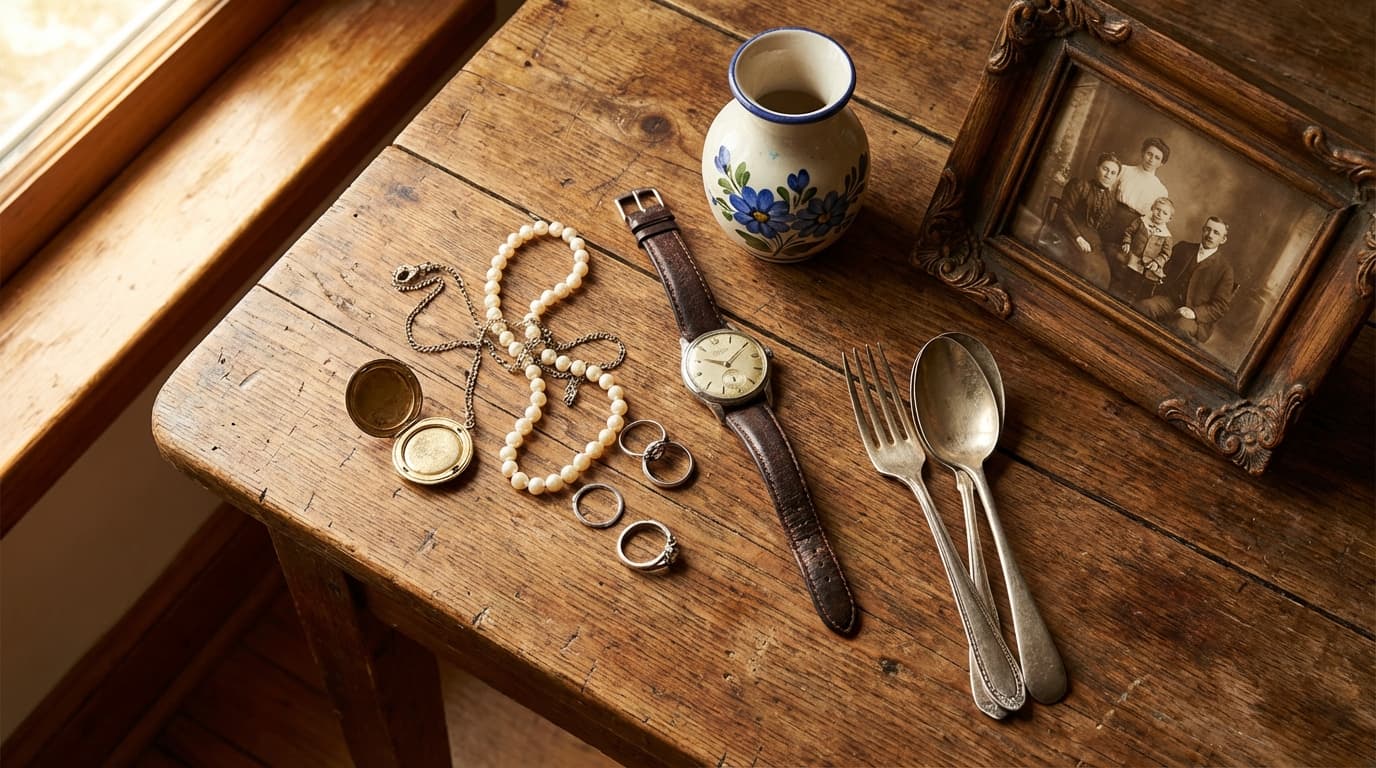
What to Do With Inherited Items You Don't Want
Inherited items you don't need? Learn how to value, sell, donate, or let go — without guilt.
You've just inherited a house full of things you didn't ask for. Some of it is beautiful, some of it is puzzling, and most of it needs to go somewhere. Maybe you feel guilty even thinking about selling it. Maybe you don't know if any of it is valuable. Maybe you're overwhelmed and don't know where to start.
You're not alone. Estate sales in the United States have grown by over 650% since 2006, a direct reflection of how many families are navigating exactly this situation. This guide gives you a clear, practical framework — from valuation to selling to letting go — so you can move forward without leaving money on the table or carrying unnecessary guilt.
Table of Contents
- The First Step You Should Never Skip: Find Out What It's Worth
- How to Identify Potentially Valuable Items
- Inherited Items Worth More Than You Think
- Items That Usually Disappoint
- Where to Sell Inherited Items: Choosing the Right Channel
- What If You Feel Guilty About Selling?
- The Tax Angle: Stepped-Up Basis Explained
- FAQ
The First Step You Should Never Skip: Find Out What It's Worth
Before you decide to sell, donate, keep, or throw anything away, you need to know what you actually have. This is the step most people skip — and it's the one that costs them the most.
Ordinary-looking items are regularly sold for a few dollars at garage sales that later turn out to be worth hundreds. A set of vintage hand tools. A small oil painting. A pocket watch tucked in a dresser drawer. Without knowing the value, you have no basis for any decision.
The fastest way to get a baseline is an AI-powered appraisal. Tools like WorthLens.ai let you photograph an item and receive a detailed value estimate in about 60 seconds — including identification of maker's marks, style period, material composition, and comparable market prices. It's a practical first filter before deciding whether something warrants a paid professional appraisal.
For items that appear to have significant value, follow up with a certified appraiser from the American Society of Appraisers (ASA) or the Appraisers Association of America (AAA). Jewelry appraisals typically cost $100–$125 per piece.
Auction houses such as Heritage Auctions, Christie's, and Sotheby's often provide free valuation estimates for items being considered for consignment. If you suspect something is high-value, call first — the estimate costs nothing.
How to Identify Potentially Valuable Items
You don't need to be an expert to spot items worth investigating. Look for these signals:
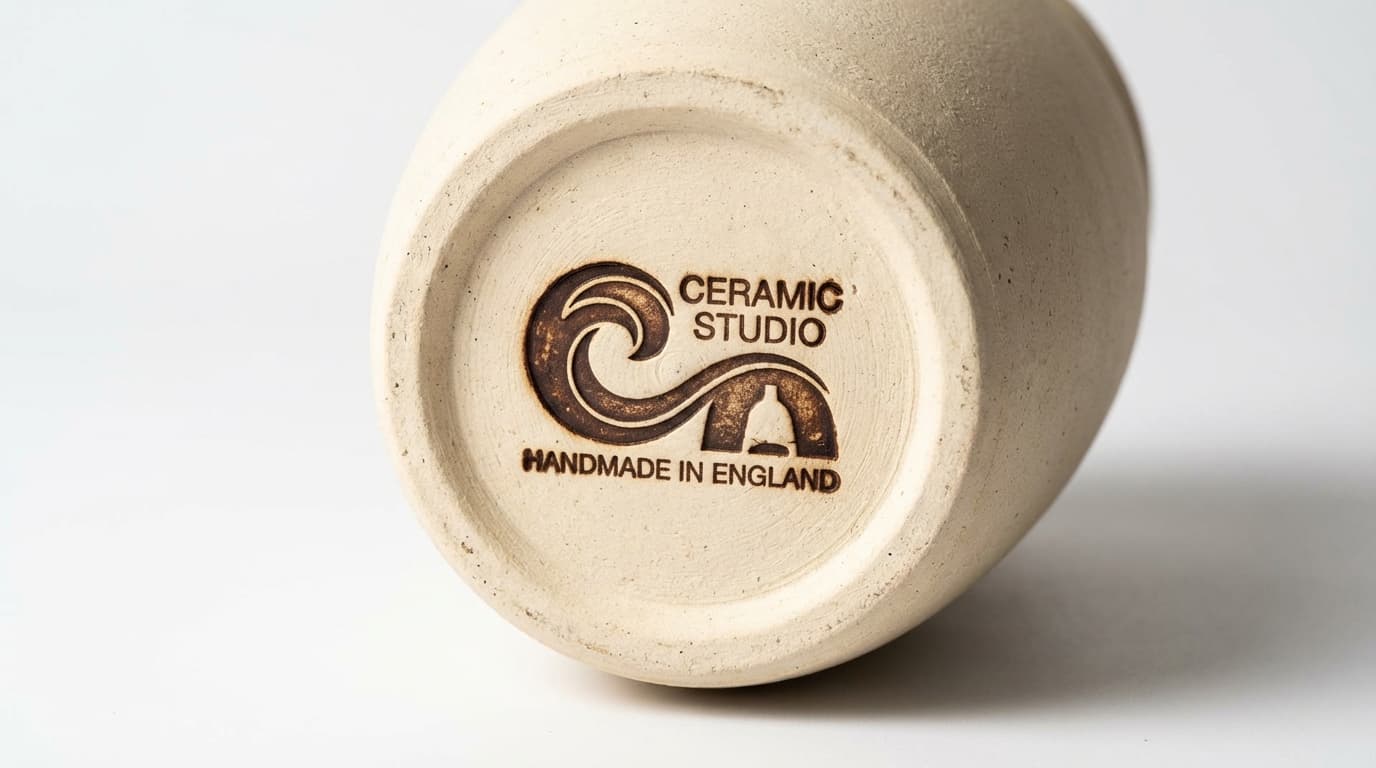
Maker's marks and stamps. Turn items over and check the base, back, or underside. Pottery, porcelain, silverware, and furniture often carry manufacturer marks, country-of-origin stamps, or artist signatures that can dramatically affect value. A set of silver flatware stamped "Sterling" is worth far more than one marked "Silver Plated."
Age and style period. Items from certain eras — particularly mid-century modern (1940s–1960s), Arts and Crafts (1880s–1920s), and Art Deco (1920s–1940s) — are in high demand. Learn to recognize the stylistic signatures.
Provenance documentation. Any paperwork — prior appraisals, certificates of authenticity, receipts from galleries, or family records linking an item to a known artist or historical event — can significantly increase value. Keep anything that looks like documentation.
Unusual materials or construction quality. Hand-stitched upholstery, dovetail joinery in furniture, solid rather than plated metal, and handblown rather than mold-made glass are all indicators of quality worth investigating.
Inherited Items Worth More Than You Think
People routinely underestimate the value of these categories. Don't move them to the "donate" pile without checking:
Vintage hand tools. Pre-1980s Stanley, Craftsman, and Millers Falls hand planes, chisels, and levels are considered higher quality than their modern equivalents and have an active collector market. A single vintage Stanley No. 45 combination plane can sell for $150–$400.
Mid-century modern furniture. Pieces by Herman Miller, Knoll, Eames, or Heywood-Wakefield regularly sell for several hundred to several thousand dollars in good condition. Even unsigned MCM pieces in walnut or teak attract strong demand.
Vintage watches. A mechanical watch from a recognized maker — Omega, Longines, Hamilton, Bulova — is worth at minimum a few hundred dollars and potentially thousands. Rolex, Patek Philippe, and Cartier pieces should always go to a specialist.
Coins and currency. Old doesn't automatically mean valuable, but coins absolutely require specialist review. A single rare date or mint mark can make a coin worth hundreds of times face value. Use resources from the Professional Coin Grading Service (PCGS) or the American Numismatic Association (ANA) before selling any coin collection.
First edition books, signed copies, and manuscripts. A first edition in dust jacket by a major author can be worth thousands. Check publication information (first printing statements, edition notes) before donating to a library sale.
Vintage jewelry. Georgian, Victorian, Edwardian, and Art Deco jewelry commands premium prices. Natural pearls (not cultured), old-cut diamonds, and platinum settings are especially valuable.
Never clean antique jewelry, silverware, or coins before appraisal. Cleaning removes original patina and can reduce value by 50–90%. Let a professional assess the item as-is.
Items That Usually Disappoint
Some categories are almost universally overestimated by heirs. Manage your expectations here:
Silver-plated flatware. Unless it is genuine sterling silver (stamped "Sterling" or "925"), individual silver-plated pieces typically sell for $1–$2 at antique shops. There is simply more supply than demand.
Fine china and wedding dinner sets. Formal entertaining has declined sharply. Complete sets of Wedgwood, Royal Doulton, or Lenox in discontinued patterns are hard to sell as a set and often go for far less than replacement value.
Franklin Mint and Bradford Exchange collectibles. Items marketed as "limited edition collectibles" in the 1980s and 1990s were produced in enormous quantities. The market is soft and most pieces sell for a fraction of original retail.
Furniture in rough condition. Restoration costs — stripping, refinishing, reupholstering — often exceed resale value on modest pieces. Damaged or worn furniture is very difficult to sell unless it is an exceptional example or a recognized designer.
Old televisions, stereos, and appliances. Consumer electronics from before approximately 1970 (with some exceptions for specific vintage hi-fi equipment) have limited resale value outside very niche collector communities.
Here is a side-by-side comparison of how reality typically compares to what heirs expect — spanning both the "disappoints" and "surprises" categories:
| Item Category | Typical Resale Range | Notes |
|---|---|---|
| Silver-plated flatware | $1–$2 per piece | Only sterling (marked "925") has real value |
| Wedding china set | $20–$100 per set | Discontinued patterns, limited demand |
| Franklin Mint collectibles | $5–$30 per piece | Produced in huge quantities |
| Vintage hand tools | $50–$400 per piece | Stanley, Craftsman, Millers Falls |
| MCM furniture | $200–$3,000+ | Herman Miller, Knoll, Eames command premium |
| Vintage watches | $200–$5,000+ | Omega, Longines, Hamilton — Rolex needs specialist |
| Coins (key dates) | Face value to $10,000+ | Always get specialist review before selling |
Where to Sell Inherited Items: Choosing the Right Channel
The right selling venue depends on the type and value of the item. Using the wrong channel is one of the most common — and expensive — mistakes heirs make.
Estate Sales
Best for: Entire households or large volumes of items.
A professional estate sale company handles cataloging, pricing, marketing, and running the sale on-site. Average gross proceeds run around $18,000, with net after company commission (typically 35–50%) around $12,000.
Most companies decline estates expected to bring in less than ~$8,000 gross, so this option works best when there is a full household to clear.
Auction Houses
Best for: Single high-value items — fine art, jewelry, antiques, vintage watches.
Competitive bidding can push prices above expectations. Major houses (Christie's, Sotheby's, Heritage Auctions) handle significant pieces; regional auction houses are better suited to more modest estates.
Note: Buyers pay a buyer's premium of 15–25% on top of the hammer price, which expands the buyer pool but doesn't directly affect your proceeds.
eBay and Online Marketplaces
Best for: Collectibles, vintage items, and anything with a national or global buyer pool.
eBay, Etsy (vintage), Ruby Lane (antiques), and Chairish (furniture and decor) all allow you to set your own price. Research completed/sold listings — not asking prices — to understand what items actually sell for.
The trade-off is time: photography, listing, shipping, and customer communication add up. Use WorthLens.ai to get a value baseline before you invest hours in listing.
Consignment Shops and Dealers
Best for: Antiques, vintage furniture, art, and jewelry.
Leave items with a specialist dealer who sells them for you, typically taking 40–50% commission. You wait longer but often get better prices than an estate sale for quality pieces.
Mobile antique buyers — who come to the estate and make cash offers — provide speed and convenience but typically offer below market value.
Facebook Marketplace and Craigslist work well for bulky items like furniture that would be expensive to ship. No fees, local pickup, and quick turnaround. Nextdoor is useful for reaching neighbors who may want familiar neighborhood items.
Donation is a legitimate option — and not just a last resort. Habitat for Humanity ReStores accept furniture and building materials. Museums occasionally accept items of historical significance. Documented donations to qualified organizations may be tax-deductible at fair market value, which can offset the difference between sale proceeds and retail value.
What If You Feel Guilty About Selling?
This is the question most practical guides avoid, and it's often the real obstacle.
Selling an inherited item does not mean you're discarding your relationship with the person who owned it. The memory is yours — it doesn't live inside the object. The object is a trigger for the memory, not the memory itself. Grief counselors commonly note that holding onto possessions indefinitely can actually prolong grief by preventing the natural process of adjustment.
A few reframes that help:
You are not obligated to become a storage unit for someone else's life. Most people, if asked directly, would not want their belongings to burden the people they love.
Items going to new owners often live better lives. A cherished set of tools used by a craftsman belongs in the hands of someone who will use it. A piece of jewelry appreciated by a new owner carries more honor than sitting in a drawer.
You can keep the memory without keeping the object. Photograph every item before it leaves. Create a simple record — date, item, where it went. Many families create memory books from these photographs, which carry more emotional meaning than a house full of furniture.
Give it time. Grief counselors generally recommend waiting at least 6–12 months before making major decisions about inherited possessions. If you're in the acute phase of loss, focus on documentation and secure storage — the decisions can wait.
The Tax Angle: Stepped-Up Basis Explained
Most heirs don't know this, and it can save them money.
When you inherit an item (rather than receive it as a gift), you receive what's called a stepped-up basis. This means the item's cost basis for tax purposes is reset to its fair market value on the date of the original owner's death — not what they originally paid for it.
In practice, this means: if your parent bought a painting for $500 in 1975 and it was worth $8,000 when they died, your cost basis is $8,000. If you sell it for $8,500, you owe capital gains tax only on the $500 difference — not on $8,000 of appreciation.
This makes getting a formal appraisal on the date of death (or shortly after) financially valuable for higher-priced items. It establishes the stepped-up basis and minimizes your tax exposure on any future sale. Consult a tax professional for items with significant appreciation.
FAQ
The process of dealing with inherited belongings is genuinely hard — emotionally and logistically. The practical antidote to both overwhelm and regret is the same: start with valuation. Know what you have before you decide what to do with it.