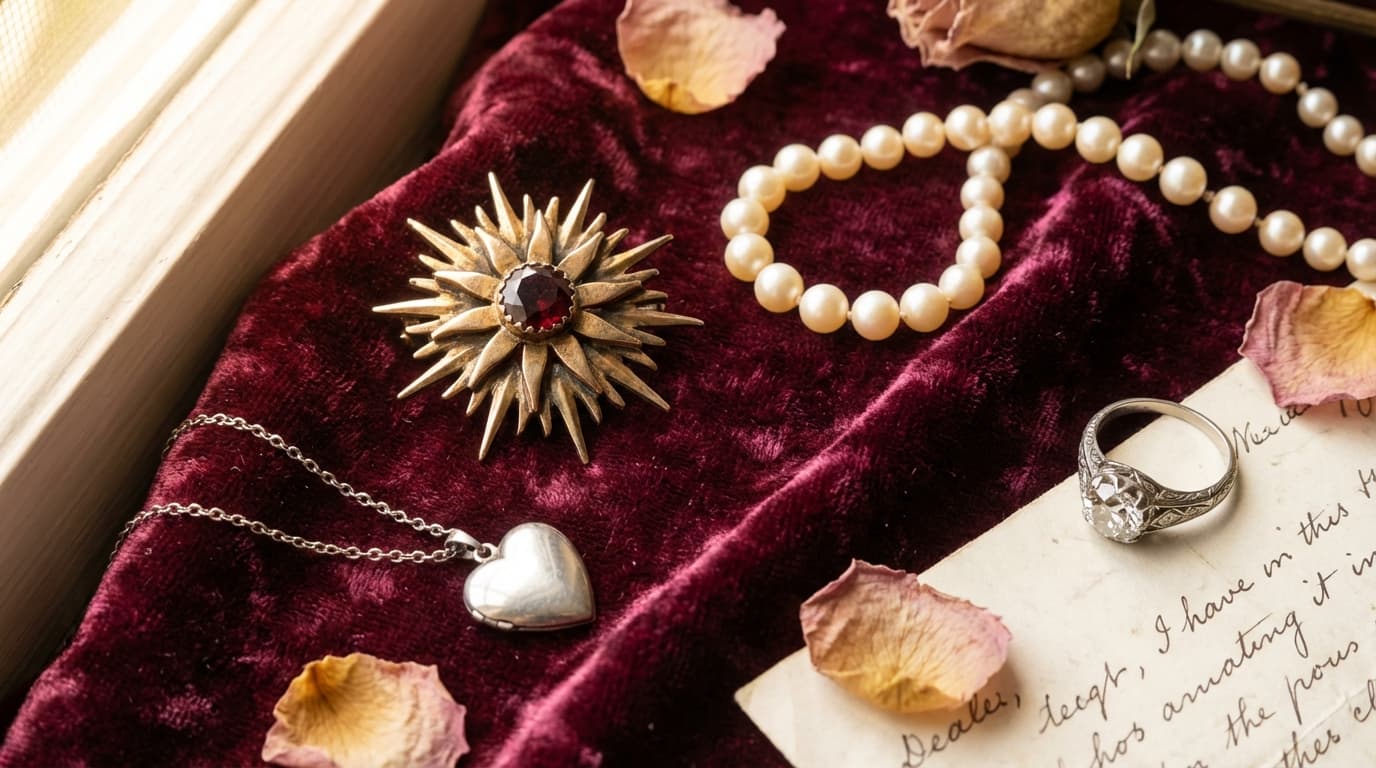
Inherited Jewelry: How to Find Out What It's Really Worth
Just inherited jewelry and not sure what it's worth? Here's how to read hallmarks, find a qualified appraiser, and avoid the mistakes that cost heirs money.
You open a box of jewelry left by someone you loved. There are rings, necklaces, a brooch, maybe a watch. Some pieces look valuable. Some look like costume jewelry. You have no idea which is which — and you're not sure where to start.
This is one of the most common situations people face after losing a family member. Inherited jewelry is emotionally loaded and financially uncertain at the same time. Before you do anything — sell, donate, insure, or divide between siblings — you need to know what you actually have.
This guide walks you through every step, from reading the stamps on the back of a ring to finding a trustworthy appraiser and understanding what kind of "value" actually matters for your situation.
Table of Contents
- Step 1: Sort and Document Everything You Have
- How to Read the Stamps and Hallmarks on Jewelry
- What "Value" Actually Means: The Four Types You Need to Know
- How Much Is Inherited Jewelry Worth?
- How to Find a Qualified Jewelry Appraiser
- What a Jewelry Appraisal Costs — And What to Watch Out For
- Common Mistakes That Cost Heirs Real Money
- What to Do Once You Know the Value
- Frequently Asked Questions
Step 1: Sort and Document Everything You Have
Before contacting anyone, do a careful inventory. Photograph every piece from multiple angles — front, back, and any visible stamps or markings. This matters for two reasons: it protects you if anything gets lost or misattributed during estate proceedings, and it gives you a starting point to do preliminary research.
Lay each piece out and look for:
- Stamps or hallmarks — small numbers or letters engraved inside rings, on clasps, or on the backs of pendants
- Maker's marks — a designer or manufacturer's signature (Tiffany, Cartier, a small workshop symbol)
- Gemstones — note the color, size, and whether stones are set in prongs, bezels, or pavé
- Material appearance — does the metal look like gold, silver, or could it be plated?
Don't clean anything yet. And don't throw anything away that looks "worthless" until you've had it checked.
Never clean inherited jewelry before having it appraised. Removing patina, polishing silver, or using cleaning solutions can permanently destroy surface evidence of age and authenticity — and reduce the value by 30–70% for antique pieces.
How to Read the Stamps and Hallmarks on Jewelry
Hallmarks are the fastest way to get a first read on what a piece contains. They're stamped by law in most countries and indicate the metal's purity.
Gold hallmarks:
| Stamp | Karat | Gold content |
|---|---|---|
| 375 | 9K | 37.5% gold |
| 417 | 10K | 41.7% gold |
| 585 | 14K | 58.5% gold |
| 750 | 18K | 75.0% gold |
| 916 | 22K | 91.6% gold |
| 999 | 24K | 99.9% pure gold |
Silver hallmarks:
- 925 — sterling silver (92.5% pure silver)
- 800 — common in Central European silverware (80% silver)
- 950 — Britannia silver or French standard
What GP, GF, and GE mean: Gold-plated (GP), gold-filled (GF), and gold electroplated (GE) are not solid gold. GF has a thicker gold layer than GP and is worth slightly more, but neither contains enough gold to have significant material value.
If you don't see any stamp, that doesn't automatically mean the piece is worthless — older antique jewelry and hand-crafted pieces sometimes lack hallmarks. It just means you'll need a professional test.
Use a 10x jeweler's loupe (under $20 online) to see hallmarks clearly. Most stamps are very small and hidden inside ring shanks, on clasp tongues, or behind pendant bails.
What "Value" Actually Means: The Four Types You Need to Know
Here's something most people don't realize: jewelry has multiple different values, and they can differ dramatically from each other. When someone says a piece is "worth $2,000," you need to ask — worth $2,000 for what purpose?
1. Insurance Replacement Value
The highest number. This is what it would cost to replace the piece with something comparable at today's retail prices. Used for insurance policies. A $2,000 replacement value does not mean you'll sell it for $2,000.
2. Fair Market Value (Estate Retail Value)
What a willing buyer would pay a willing seller in a typical transaction. This is the number used for estate tax purposes and probate. Usually 40–60% of insurance replacement value.
3. Liquid (Wholesale) Value
What a dealer, pawn shop, or reseller would offer. This is typically the lowest number — often 20–50% of retail. If you're selling quickly, this is usually what you'll get.
4. Intrinsic (Melt) Value
The pure material worth: the weight of the metal multiplied by the current spot price, plus any gemstone value at wholesale. For plain gold or silver pieces, this is a useful floor price.
What drives inherited jewelry resale value
Understanding these four numbers prevents the most common mistake: seeing an insurance appraisal for $5,000 and expecting to sell the piece for anywhere near that amount.
How Much Is Inherited Jewelry Worth?
Inherited jewelry resale value typically falls between 20% and 50% of the original retail purchase price — though designer pieces from high-demand brands can far exceed this range.
The single biggest factor that lifts value above melt price is the maker's mark. Research on pre-owned jewelry sales shows:
- Van Cleef & Arpels Alhambra collection sells for approximately 86% of its original retail price on the secondary market
- Cartier Love bracelets and rings hold around 78% of retail
- Tiffany & Co. pieces typically fetch 60–70% of their original price
- Unbranded fine jewelry with quality stones typically sells for 30–50% of retail
For plain gold or silver with no notable maker, the intrinsic (melt) value is usually your realistic floor. At current precious metal prices, even an unbranded 18K gold ring can be worth $200–$800 in gold content alone, depending on weight.
How to Find a Qualified Jewelry Appraiser
Not all appraisers are equal. A jeweler who offers free appraisals while also offering to buy the piece has a conflict of interest. For inherited jewelry — especially if you're dividing an estate or suspect valuable pieces — use a certified independent appraiser.
Look for credentials from one of these organizations:
- American Society of Appraisers (ASA) — appraisers.org
- American Gem Society (AGS) — americangemsociety.org
- Accredited Gemologists Association (AGA)
- GIA Graduate Gemologist (GG) — the most recognized gemological credential globally
A qualified appraiser will give you a written report that includes: a full description of each piece, metal and gemstone analysis, condition notes, hallmarks documented, and the type of value assessed (replacement, fair market, or liquid).
If you can't travel to a local appraiser, WorthLens.ai lets you upload photos of your inherited pieces and get an AI-powered estimate in seconds — useful for a quick first read before scheduling a formal appraisal.
What a Jewelry Appraisal Costs — And What to Watch Out For
Professional appraisals for inherited jewelry typically cost:
- $50–$150 per hour for complex or time-intensive pieces
- $100–$200 flat fee per item for straightforward pieces
- Bundled rates for estates with many items — usually cheaper per piece
Red flags:
- Any appraiser who charges a percentage of the appraised value — this creates an incentive to inflate the estimate
- A jeweler who only offers appraisals if you also let them make an offer — that's buying, not appraising
- No written documentation — a legitimate appraisal is always in writing
For a quick first estimate before you invest in a full appraisal, an AI tool like WorthLens.ai can help you prioritize which pieces are worth appraising professionally. Photograph the piece, note any visible hallmarks, and get an instant estimate.
Common Mistakes That Cost Heirs Real Money
These are the mistakes that estate lawyers and jewelry appraisers see repeatedly:
Selling to the first buyer without research. Pawn shops and cash-for-gold buyers offer liquid value — the lowest tier. You may receive 20–30 cents on the dollar compared to what a knowledgeable private buyer would pay.
Assuming plain-looking pieces are worthless. A simple gold band with no visible stones can contain significant gold content. A plain silver brooch might carry a maker's mark from a notable silversmith. Appearance alone is not a reliable guide to value.
Dividing jewelry based on perceived rather than appraised value. Family disagreements over inherited jewelry are common. Without written appraisals, siblings may argue over what seems valuable versus what actually is. A formal appraisal creates a fair, documented basis for division.
Redesigning without checking original components. Many people melt down or reset inherited jewelry without realizing the individual stones or settings were worth more intact — especially if the piece was from a recognized maker.
Insuring at the wrong amount. Using an online guess or an old insurance figure for coverage means either overpaying premiums or being underinsured. An updated appraisal every 3–5 years is standard advice from insurance professionals.
Never accept a pawn shop's first offer without knowing your item's fair market value. Get an independent appraisal first — even an AI estimate is a useful baseline before you walk in the door.
What to Do Once You Know the Value
Once you have a realistic picture of each piece's worth, your options become much clearer:
Keep and wear it. The sentimental value is real, and fine jewelry only gains value from regular care and documentation. Keep the appraisal on file and add the piece to your home insurance.
Sell through the right channel. The channel you choose dramatically affects what you receive:
Best for High-Value or Designer Pieces
- Major auction houses (Sotheby's, Christie's, Heritage Auctions)
- Specialist estate jewelry dealers
- Consignment through reputable jewelers
- Online platforms like Worthy.com for diamonds
Best for Mid-Range Pieces
- eBay (completed listings show real market prices)
- Etsy for vintage and antique pieces
- Local estate sales
- Facebook Marketplace for lower-value items
Repurpose the materials. If the design is dated but the stones or metal have value, a jeweler can remake the piece into something you'd actually wear. Get a valuation before you do this — some vintage settings are worth more intact than melted.
Donate with documentation. If the piece has modest monetary value but strong sentimental meaning to a museum, historical society, or charity auction, a written appraisal lets you claim a proper tax deduction.