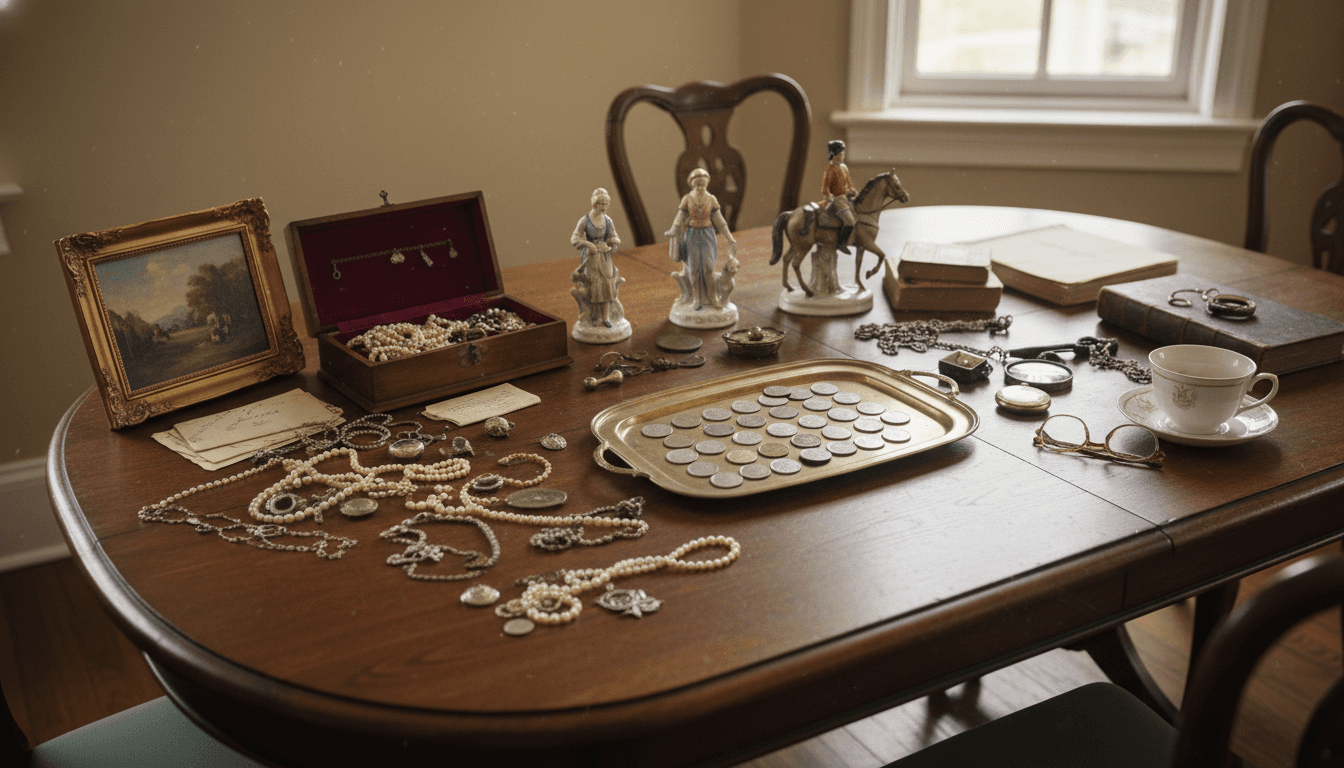
Downsizing: How to Value and Sell a Lifetime of Collectibles
The most expensive downsizing mistake is donating something valuable before you know what it's worth. Here's how to sort, appraise, and sell a lifetime of belongings smartly.
Every year, thousands of dollars worth of valuable items are donated to thrift stores by people who had no idea what they were giving away. A coin collection with a rare key date. A signed print tucked behind ordinary framed photos. A piece of Depression-era glass that a dedicated collector would have paid $200 for.
Downsizing — whether you're moving to a smaller home, clearing out a parent's estate, or simply decluttering decades of accumulated belongings — is one of the most common situations where people accidentally give away real value. The pace is fast, the decisions feel low-stakes, and "it's probably not worth much" becomes the default assumption.
This guide is designed to prevent that mistake.
Table of Contents
- The First Rule of Downsizing: Know Before You Discard
- Which Items Are Most Likely to Be Worth Real Money?
- How to Sort: Keep, Sell, Donate, or Discard
- Choosing the Right Selling Method
- How to Get Quick Appraisals Before You Move
- Frequently Asked Questions
The First Rule of Downsizing: Know Before You Discard
The single most important rule of estate downsizing is this: nothing leaves the house until you know what it is.
That means no donations, no dumpster runs, and no "we'll just give this away" decisions until every box has been assessed — at least at a basic level. The dusty cardboard box in the garage might contain coins purchased in the 1960s that are now worth thousands. The figurines on the shelf might be Hummel or Lladró pieces with active collector markets. The old camera in the closet might be a sought-after vintage model.
The items that most often surprise people with their value during downsizing:
- Coin and stamp collections (even incomplete ones often contain key-date pieces worth significant money)
- Jewelry and watches, including pieces assumed to be costume
- Vintage toys in original packaging
- Porcelain and ceramic figurines (Hummel, Lladró, Royal Doulton)
- Military memorabilia and medals
- Mid-century modern furniture and lighting
- Vintage cast iron cookware (Griswold, Wagner)
- Certain patterns of Depression glass and vintage Pyrex
Do not clean, polish, or repair anything before it has been appraised. Cleaning antique silver, polishing old coins, or restoring items can significantly reduce their value. Collectors and auction specialists want to see items in their original state — the patina is part of the evidence of age and authenticity.
Which Items Are Most Likely to Be Worth Real Money?
Not everything warrants a specialist appraisal — but some categories almost always do. Work through these first.
Jewelry and Precious Metal Items
Any jewelry containing gold, silver, or gemstones has at minimum a melt or material value that fluctuates with spot metal prices. But estate jewelry — especially pieces from recognized makers, Art Deco, Georgian, or Victorian periods — can sell for multiples of their metal value. Have every piece examined before deciding it's "just old jewelry."
Coins, Stamps, and Paper Money
These are among the most frequently undervalued categories in estate downsizing. A single coin in a mixed collection can be worth more than the rest of the collection combined, and it takes specialist knowledge to know which one. Do not sell coin collections as a bulk lot without having them assessed individually.
Art and Signed Prints
Original paintings, watercolors, and signed limited-edition prints are the category most likely to contain large hidden value — and the most likely to be dismissed as "probably a reproduction." Look on the back of canvases and frames for labels, auction stickers, and gallery records. Check signatures against artist databases. A painting that looks unremarkable to a non-specialist may have significant value to the right buyer.
Ceramics, Glassware, and Decorative Objects
Waterford, Swarovski, Lalique, and Baccarat crystal retain strong collector demand. Certain Pyrex patterns sell for $30–$200 per piece. Early factory-marked ceramics from major manufacturers (Meissen, Wedgwood, Royal Copenhagen) often command specialist prices well above what a casual buyer would offer.
How to Sort: Keep, Sell, Donate, or Discard
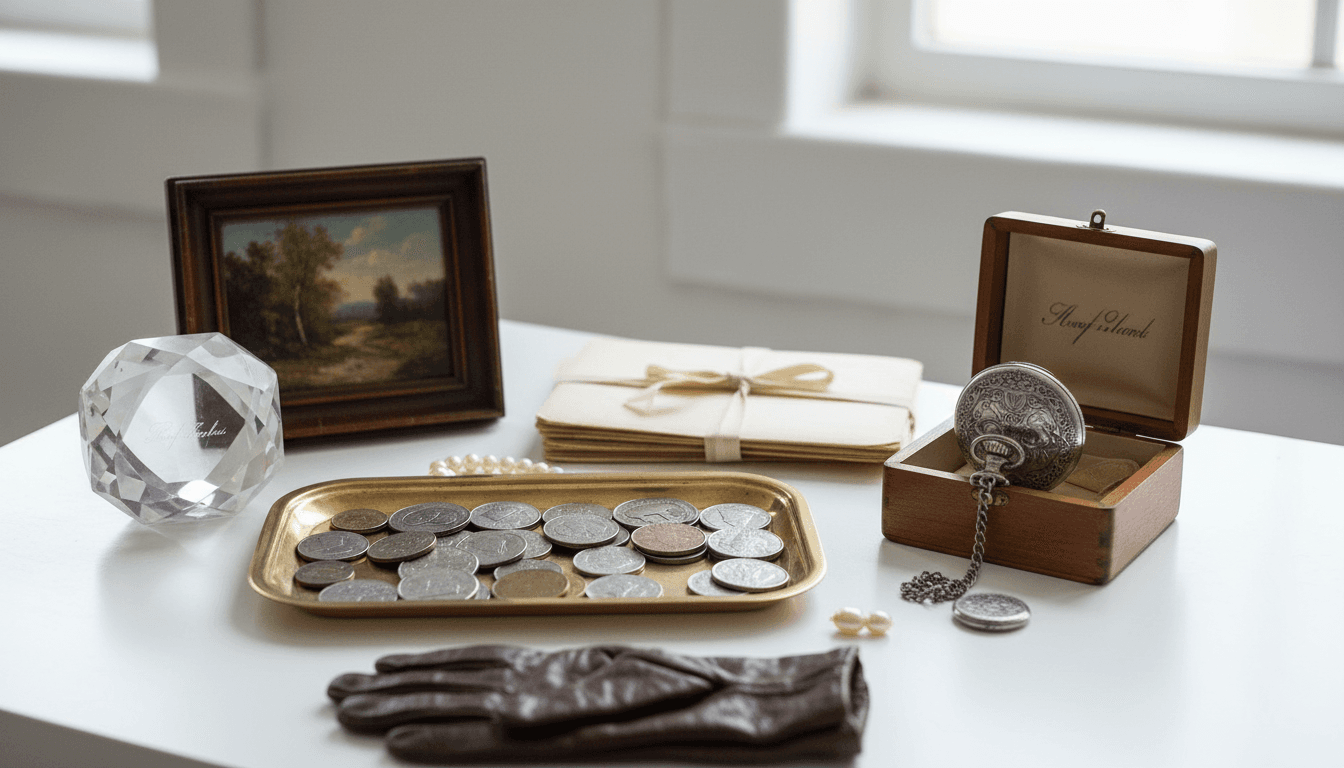
A practical sorting framework prevents paralysis and keeps the process moving. Work room by room, using four categories:
Keep — items with sentimental value or ongoing practical use that are going to the new home.
Sell — items with real market value that you no longer need. These require at least a basic valuation before listing.
Donate — items in good usable condition but with limited resale value. Think mass-market goods, most books, standard kitchenware, ordinary clothing.
Discard — items that are damaged, incomplete, or genuinely without value to anyone.
The critical judgment call is between Sell and Donate. A useful question for anything you're unsure about: would a stranger realistically pay money for this today? If yes, it goes in the Sell pile for appraisal — not in the donation box.
Items that almost always have poor resale value and are fine to donate or discard:
- Mass-market furniture from the last 20–30 years (IKEA, most flat-pack)
- Standard-issue home electronics from the 2000s
- "Brown furniture" — large Victorian and Edwardian dining sets that have seen weak demand for two decades
- Common paperback books (rare first editions are an exception)
- Generic decorative items without maker marks
If you donate items with genuine value to a registered charity, you may be eligible for a tax deduction based on fair market value. In the US, donations above $500 require a qualified written appraisal to claim the deduction — another reason to appraise before you donate, not after.
Choosing the Right Selling Method
Once you know what you have, the selling method determines how much you actually receive. The right choice depends on the type of items, your timeline, and how much effort you're willing to invest.
Auction House
Best for: Antiques, art, jewelry, coins, watches, and any item with specialist collector appeal
Fees: 15–25% seller's commission on the hammer price
Timeline: 4–8 weeks from submission to payment (cataloging, photography, marketing, sale)
Why it works: Competitive bidding among motivated specialist buyers consistently produces the highest prices for quality items. A major auction house puts your piece in front of a global audience — a private sale or estate sale cannot replicate that reach. For any item worth over $500, this is usually the highest-return option.
Estate Sale Company
Best for: General household contents — furniture, kitchenware, everyday items, and mid-range collectibles
Fees: 30–50% of gross sales, sometimes plus setup and advertising fees
Timeline: 1–2 weeks of setup, then a 2–3 day weekend sale
Why it works: Estate sales are efficient for clearing large volumes of mixed-value items quickly. They work well for household contents where the effort of individual online listings doesn't make financial sense. For specialist high-value items, auction houses typically outperform.
Consignment Shop or Dealer
Best for: Mid-range collectibles, vintage items, and pieces where you're not under time pressure
Fees: Typically 40% commission; items may be displayed for 60–90 days
Timeline: Weeks to months depending on demand
Why it works: A consignment arrangement gives you more control over pricing than auction and more reach than selling directly. If a dealer buys outright, they account for risk in their offer — you'll typically receive 30–50% of market value. Consignment, where you share the sale price, usually nets significantly more.
Online Platforms (eBay, Etsy, specialist sites)
Best for: Items with identifiable collector demand, coins, vintage toys, ceramics, prints
Fees: 10–15% platform fees plus shipping and photography costs
Timeline: Varies — fast-moving categories sell within days; obscure items can sit for months
Why it works: For items where you can clearly identify and describe what you have, online sales remove the intermediary. The challenge is knowledge — you need to know what you're selling and price it correctly. Underpricing on eBay is as common as overpaying in a gallery.
How to Get Quick Appraisals Before You Move
The challenge with downsizing is speed. You're often working against a moving timeline, a house sale, or an estate deadline — and formal written appraisals take time and cost money for every item.
A practical approach uses multiple appraisal tools in sequence:
Step 1: AI Appraisal for Triage
Use an AI-powered appraisal tool like WorthLens.ai to photograph items quickly and get an instant market estimate. This isn't a replacement for a formal appraisal on high-value pieces, but it's an excellent triage tool — it tells you in seconds whether something is worth $30 or $3,000, so you know which items need specialist attention and which can go straight to donation.
Working through a house full of items individually with a specialist would cost thousands of dollars and take weeks. AI appraisal lets you rapidly identify the 10% of items that account for 90% of the value.
Step 2: Research Comparable Sales
For items the AI flags as potentially valuable, verify by searching completed auction sales for comparable pieces. eBay completed listings, Invaluable, and Heritage Auctions all show realized prices — not asking prices — which is the only number that matters.
Step 3: Specialist Appraisal for High-Value Items
Any item with an estimated value above $500 warrants a professional specialist appraisal before sale. Most reputable auction houses offer free preliminary assessments — they want the consignment. Bring items in or send clear photographs for an initial opinion before committing to a selling method.
When photographing items for AI or specialist appraisal, capture: front and back, any marks or signatures, joints and construction details on furniture, and any documentation or labels you've found with the piece. More context equals more accurate estimates.