
Estate Sale Shopping: How to Find Undervalued Items (and Avoid Overpaying)
Estate sales hide genuine treasures — Rolexes for $200, Picasso prints for $50, silver sets nobody recognized. Here's how to find them before everyone else.
A buyer in the Pacific Northwest paid $200 for a watch at an estate sale. It looked old, the strap was worn, and the seller had no idea what it was. It turned out to be a Rolex Submariner — worth $8,000 at retail.
Stories like that aren't flukes. They happen every weekend at estate sales across the country, and they happen almost exclusively to people who prepared. The difference between walking away with a $200 Rolex and paying $200 for a worthless replica is knowledge: knowing what to look for, how to check it quickly, and when to move.
This guide covers estate sale shopping tips from preparation to negotiation — so you can find undervalued items before someone else does.
Table of Contents
- Prepare Before You Walk In
- What Items Are Most Valuable at Estate Sales?
- How to Spot Hidden Value On the Spot
- The Timing Strategy: Day One vs. Last Day
- How to Negotiate Without Being Rude
- How to Avoid Overpaying
- FAQ
Prepare Before You Walk In
The buyers who find the best items don't just show up — they research the sale before they arrive. Most estate sales are listed 3–7 days in advance on EstateSales.net and EstateSales.org, often with photos of the inventory.
Study the listing photos. Look for silver flatware sets, framed artwork with visible signatures, coins in display cases, vintage watches, or mid-century furniture. If you spot something that looks promising, research it before you go — not while you're standing in a crowded room.
Research the neighborhood. Pull up the address on Google Street View. Estate sales in affluent areas and historic neighborhoods disproportionately contain high-quality items: fine jewelry, signed art, designer furniture, sterling silver. A sale in a 1920s craftsman home in an old-money district is worth prioritizing over a generic suburban house.
Make a prioritized wish list. If you're interested in coins, jewelry, and furniture — decide your order of attack before you walk in. High-value, easily carried items (coins, jewelry, watches) disappear within the first 30 minutes. Go to those first.
Bring the right tools:
- Jeweler's loupe (10x) for hallmarks and signatures
- Digital scale if you're looking at gold or silver
- Magnet to test whether metal is ferrous (steel) or genuine precious metal
- Smartphone for quick research
- Cash — most estate sales prefer cash, and cash gives you negotiating leverage
Most estate sale purchases are final. Inspect everything carefully before buying. There are no returns if you get home and discover a crack, a chip, or a problem you missed on-site.
What Items Are Most Valuable at Estate Sales?
Not all estate sale categories are equal. Some reliably produce finds worth multiples of their sticker price. These are the categories experienced buyers prioritize:
Jewelry and Watches
Jewelry has the best value-to-size ratio of any estate sale category. A single ring can fit in a pocket and be worth thousands. Estate sale workers are generalists — they price by appearance, not by metal content or maker. A 14K gold bracelet in a tangled pile may be stickered at $25 when it's worth $400 in gold alone.
Watches are equally productive. Brands like Rolex, Omega, Cartier, Patek Philippe, and IWC are frequently misidentified or priced as "old watches." A Rolex Submariner from the 1970s in working condition sells for $6,000–$12,000 on the secondary market.
Coins and Currency
Old coin collections are common estate finds — and frequently mispriced. Sellers often price by face value or rough appearance rather than numismatic value. Key items to check:
- Pre-1965 U.S. dimes, quarters, halves, and dollars — contain 90% silver
- Morgan and Peace silver dollars — common dates: $30–$50; key dates: hundreds to thousands
- Mercury dimes (1916–1945) — the 1916-D is worth $1,000+ even in worn condition
- U.S. gold coins ($2.50, $5, $10, $20) — melt value alone at today's gold prices is substantial
If you find a coin collection in a box or album, don't scatter it looking for key dates — buy the whole lot if the price is reasonable.
Silver Flatware and Hollowware
Sterling silver flatware sets are the most consistently underpriced items at estate sales. A complete 12-piece sterling set in original box can contain 800–1,200 grams of silver — worth $840–$1,260 in melt value alone at current silver prices, often before any collector premium.
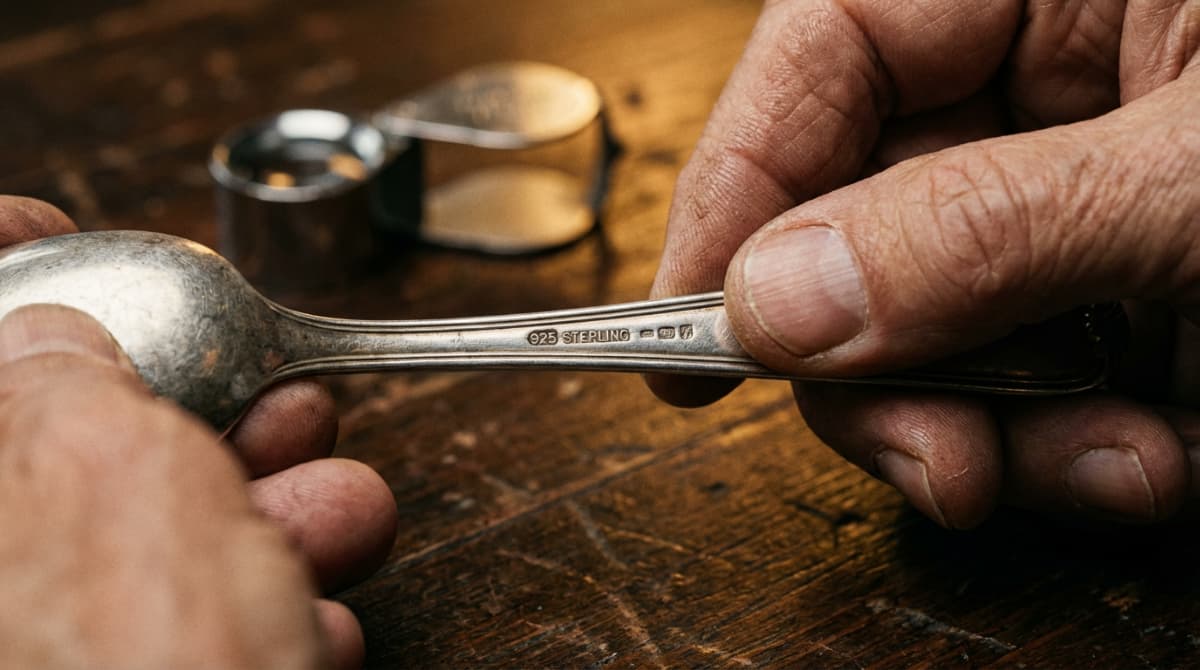
Look for pieces stamped "Sterling," "925," or "800." British silver uses hallmarks (lion passant, date letter, assay office mark). Continental silver often shows "84" (Russian) or "800" (German/European). Silverplate (marked "EPNS" or "Silver Plate") has minimal intrinsic metal value.
Mid-Century Modern Furniture
Furniture from the 1950s–1970s by recognized designers commands remarkable prices when authenticated. An authentic Eames lounge chair and ottoman (Herman Miller) sells for $4,000–$8,000. A Knoll Tulip table: $1,500–$3,000. A Noguchi coffee table: $2,000–$5,000.
Look for maker's labels under chairs and tables. Herman Miller, Knoll, Dunbar, and Heywood-Wakefield pieces have distinctive construction details — check for metal tags, branded upholstery buttons, and dovetail joints indicating quality manufacture.
Fine Art
Original paintings and signed prints represent some of the highest-upside estate sale finds. A Picasso lithograph bought for $50 has appraised at $15,000. Unknown works by documented artists are found regularly — people hang art for decades without knowing who made it.
Check paintings for: artist signature (front lower corner and sometimes on reverse), gallery labels on the back, date stamps, provenance documentation in nearby drawers. Even without a signature, craquelure (the fine cracking of aged paint) and canvas stretcher construction can help date a work.
Estate sale price as % of market value — rare underpriced find scenarios only
These figures represent exceptional "discovery" scenarios — cases where the seller did not recognize the item's value. They are not typical estate sale prices. Most recognized items sell at 70–100% of market value. The opportunity exists precisely because misidentification happens — but it requires preparation to spot it.
Antique Tools
Pre-WWII American tools from makers like Stanley, Starrett, and Disston are collected by both woodworkers and dedicated tool collectors. A rare Stanley No. 1 bench plane found for $20 in a garage might sell for $2,000 to a collector. Look for patent dates stamped into metal and original wooden handles — replacements reduce value significantly.
How to Spot Hidden Value On the Spot
You have maybe 20 seconds to decide if something is worth picking up before someone else does. These quick checks work:
Jewelry: Flip it over and look for stamped hallmarks (10K, 14K, 18K, 750, 585, 925). No stamp on a yellow metal piece doesn't mean it's not gold — older pieces and non-U.S. jewelry sometimes lack stamps. A loupe reveals details invisible to the naked eye: maker's signatures, stone settings, construction quality.
Silver: Drag the piece across your palm — real silver feels distinctively cool. Check for stamps. If a spoon says "Sterling" or "925," it's the real thing. If it says "silver plate" or "EPNS," the metal value is negligible.
Watches: Look for brand name on the dial, case back markings, and crown style. A screw-down crown on an older watch suggests a dive watch (Submariner, Sea-Dweller). Flip it over — signed movements visible through a caseback are a strong positive indicator.
Art: Check the back of the canvas first. Gallery labels, auction stickers, and handwritten notes can tell you more than the front. Google the artist name immediately if you see a signature.
For any item you're seriously considering, uploading a photo to WorthLens.ai gives you an instant AI appraisal on your phone — before you decide whether to buy. This is particularly useful for jewelry, coins, and art where values vary enormously by details that aren't obvious at a glance.
The Timing Strategy: Day One vs. Last Day
Day one (first hour): Best selection, full prices. Worth attending if you spotted specific high-value items in the listing photos. Experienced dealers and pickers arrive first — for sought-after categories (jewelry, coins, art), first hour means first pick.
Last day (final hours): Discounts of 50–70% are common as sellers try to avoid hauling items to a charity donation. Bulk lot offers are frequently accepted. Best strategy for furniture, kitchenware, books, and tools where condition matters more than rarity.
The two-trip strategy: Scout on day one (note items of interest without buying), return on the final day and offer bulk discounts on anything still there. Works well for large, lower-urgency items — less reliable for jewelry and coins, which will be gone.
Go Day One If...
- You spotted jewelry, watches, or coins in the preview photos
- The sale is in a wealthy or historic neighborhood
- The listing shows art or mid-century furniture
- You're willing to pay full price for the right item
Go Last Day If...
- You want furniture, books, kitchenware, or tools
- Your budget is limited and you prefer volume over rarity
- You're comfortable with less selection
- You want to make bulk lot offers on remaining inventory
How to Negotiate Without Being Rude
Estate sales are run by professional estate sale companies, and the staff has heard every negotiation tactic. Respectful, direct offers work better than clever angles.
What works:
- Ask "Is there any flexibility on this price?" rather than starting low and working up
- Offer 10–15% off single high-priced items on the first day
- Bundle items: "I'd like these three pieces — would you take $X for all of them?"
- Make higher offers on the last day when discounting is expected
What doesn't work:
- Opening with an insultingly low offer (damages the relationship for the rest of the sale)
- Claiming damage that isn't there
- Pressuring staff repeatedly after a declined offer
Cash negotiating power is real. "I have $X cash right now" is more persuasive than the same number on a card, particularly in the final hours when sellers want to close out quickly.
How to Avoid Overpaying
The risk of estate sale shopping isn't missing a treasure — it's paying full price for something worth a fraction of that. Common traps:
Emotional bidding on "old" items. Age alone doesn't create value. A mass-produced piece from 1950 is not an antique collectible. Check that what you're buying has genuine collector demand, not just dusty charm.
Paying retail for common items. Estate sales sometimes price common household goods above what they sell for new at big-box stores. Do a quick price comparison on your phone before buying anything over $20.
Not checking condition. Chips, cracks, repairs, missing parts, and replaced components all significantly reduce value. Check every piece you're considering — under natural light, not just under fluorescent estate sale lighting.
Skipping research on unfamiliar categories. If you don't know coins, don't spend $200 on a coin collection without checking. If you don't know furniture makers, don't assume a vintage-looking chair is worth $800. Use reference apps or WorthLens.ai for a quick second opinion on unfamiliar items before committing.
Not knowing current metal prices. Silver and gold content fluctuates daily. A sterling silver set that was worth $400 in melt value last year might be worth $500–$600 today. Know today's prices before you decide if a silver asking price is fair.
FAQ
The best estate sale buyers combine preparation, quick pattern recognition, and the discipline to walk away from items they can't verify. That combination — not luck — is what turns a $200 Saturday morning into a $2,000 find.