Art as an Investment: How to Buy Paintings That Hold Their Value
Art can outperform stocks — or quietly lose value for decades. This guide shows you how to buy paintings that actually hold and grow their worth.
You find a painting you love. The gallery tells you the artist is "on the rise." The price feels steep, but you tell yourself it's an investment. A decade later, you're selling it for half what you paid.
This happens more often than the art world would like to admit. Art can appreciate dramatically — but only when you buy strategically. The difference between a smart art investment and an expensive decorating mistake comes down to a handful of factors most buyers never research before writing a check.
This guide walks you through exactly what separates paintings that hold value from those that don't.
Table of Contents
- Does Art Actually Deliver Returns? The Data Behind the Hype
- What Makes a Painting Hold Its Value Over Time
- Blue-Chip vs. Emerging Artists: Where Should You Start?
- How to Evaluate a Painting Before You Buy
- The Real Costs of Art Investment You Didn't Account For
- How AI Is Changing How Collectors Evaluate Art
- Frequently Asked Questions
Does Art Actually Deliver Returns? The Data Behind the Hype
The headline numbers sound compelling. Contemporary art has appreciated at roughly 11.5% annually since 1995 — outpacing the S&P 500's 9.6% over the same period, according to widely cited art market indices.
But dig deeper and the picture gets more complicated. A Stanford Business School study found that true annual art returns from 1972 to 2010 were closer to 6.5% once selection bias was removed from the data. A six-decade analysis (1957–2016) found paintings delivered just 2.49% real annual return — versus the S&P 500's 7.84%.
The gap between the headline numbers and the academic reality comes down to survivorship bias: only successful, resold works make it into the data. The paintings that sat in storage for 30 years, unsold, never show up in anyone's return calculation.
Art's biggest genuine advantage is low correlation with stock markets. During equity downturns, art prices often hold steady or continue rising — making it a meaningful diversifier even if raw returns are modest.
The honest conclusion: art can deliver strong returns, but it requires knowledge, patience, and the right selection. It is not a passive investment like an index fund.
Estimated average annual returns: Art vs. other asset classes (1995–2023)
What Makes a Painting Hold Its Value Over Time
Not all paintings are created equal as investments. Three factors consistently drive long-term value retention.
Scarcity
Original paintings are inherently scarce — there is only one. Prints and limited editions can also hold value, but only when edition sizes are genuinely restricted (typically under 50 copies). Open-edition prints rarely appreciate meaningfully, regardless of who made them.
Provenance and Exhibition History
A painting's documented ownership history directly affects its price. Works that have passed through major collections, been displayed in museum exhibitions, or are listed in an artist's catalogue raisonné trade at a significant premium to comparable works with unknown histories. Provenance isn't just prestige — it's verification that the work is genuine.
Institutional and Critical Recognition
When an artist's work enters major museum collections, gets featured in landmark exhibitions, or earns sustained critical attention from established curators, it signals the kind of cultural validation that drives collector demand for decades. This is one of the most reliable leading indicators of long-term value.
Never buy art solely because a gallery calls the artist "the next big thing." Track actual auction results, museum acquisitions, and independent critical coverage — not just the seller's marketing.
Blue-Chip vs. Emerging Artists: Where Should You Start?
The art market is typically divided into two camps, each with a very different risk-return profile.
Blue-Chip Artists
Examples: Andy Warhol, David Hockney, Banksy, Yayoi Kusama, Jean-Michel Basquiat, Damien Hirst
Blue-chip art refers to works by globally recognized artists with decades of auction history, museum representation, and sustained institutional demand. The upside is lower risk and predictable secondary market liquidity. The downside is high entry prices — a significant Warhol or Basquiat is out of reach for most individual buyers.
Best for: Collectors with $50,000+ to allocate, focused on capital preservation over growth.
Emerging and Mid-Career Artists
Examples: Artists in their first decade of gallery representation, early auction appearances, growing critical recognition
Emerging art offers the possibility of much higher returns if you back the right artist before their market takes off. The risk is proportionally higher — most emerging artists never achieve blue-chip status, and works bought at gallery prices can become impossible to resell.
Best for: Buyers who are genuinely engaged with the contemporary art world and willing to accept that some purchases may not appreciate.
A common strategy is a tiered approach: allocate the core of your art budget to established artists with documented auction histories, and reserve a smaller portion for artists you believe in long-term.
How to Evaluate a Painting Before You Buy
Before committing to any purchase with investment intentions, work through these checkpoints.
1. Research the Artist's Auction History
Search completed auction records on Artprice or Invaluable. Look for: consistent sale prices at or above estimate, a growing trend in hammer prices over multiple years, and multiple auction houses handling the artist's work (not just one). An artist who sells exclusively through one gallery with no secondary market is a red flag.
2. Verify Provenance Documentation
Ask for the full provenance chain. At minimum, you should receive: a certificate of authenticity signed by the artist or their estate, gallery invoices and exhibition records, and ideally a listing in the artist's catalogue raisonné if one exists. Never accept "verbal provenance."
3. Get an Independent Appraisal
Gallery prices are asking prices — they reflect the gallery's margin, not necessarily market value. Before buying any significant work, get an independent valuation. Tools like WorthLens.ai can provide a fast AI-powered estimate of current market value based on comparable works, giving you a sanity check before you negotiate.
4. Check the Condition
Have the work examined under UV light if possible — it reveals overpainting, repairs, and retouching that affect value. Ask for a condition report. Even minor restoration can reduce a work's auction value by 20–40%.
5. Consider the Medium
Oil paintings on canvas by living artists tend to hold the most stable secondary market value. Works on paper are more fragile and typically trade at a discount. Photographs and prints can be strong investments, but only when edition sizes and numbering are clearly documented.

The Real Costs of Art Investment You Didn't Account For
Art's transaction costs are brutally high compared to financial markets. Buyers and sellers typically each pay 12–25% commission to auction houses. Add in:
- Insurance: 1–2% of appraised value per year
- Storage and framing: Variable, but non-trivial for larger works
- Conservation: Professional cleaning or minor restoration can run $500–$5,000+ per work
- Authentication fees: If provenance is ever challenged, expert examination costs thousands
- Capital gains tax: In most jurisdictions, art is a collectible asset taxed at higher rates than long-term stock gains
A rough rule of thumb: assume you need 15–25% appreciation just to break even after auction fees on resale. This means art should only be considered a medium- to long-term hold of at least 3–5 years, ideally longer.
This is why the academic return numbers look far lower than the raw index numbers — once you strip out transaction costs, the real return picture is significantly more modest.
How AI Is Changing How Collectors Evaluate Art
One of the most significant shifts in the art market over the past few years is the accessibility of independent price data. Professional appraisers and major auction houses have always had proprietary pricing databases — individual collectors mostly had to take a gallery's word for it.
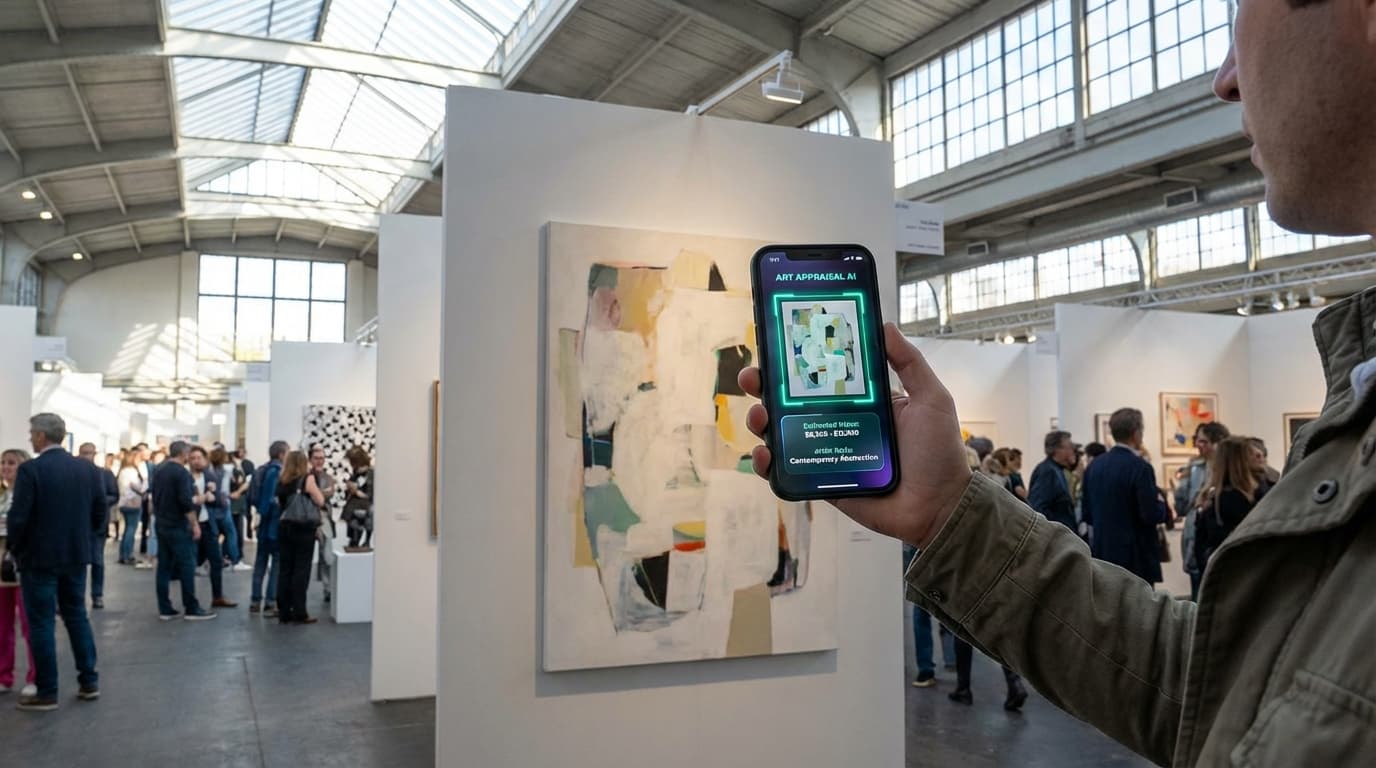
AI-powered appraisal tools are closing that gap. By analyzing an artwork's style, period, medium, and comparable auction results, these tools can estimate current market value from a photo in seconds — the kind of baseline research that used to require a specialist and several hundred dollars.
WorthLens.ai lets you upload a photo of any artwork and receive an AI-generated market estimate, cross-referenced against real sales data. It won't replace a formal appraisal for a six-figure purchase, but it's an invaluable first filter — especially when you're evaluating a painting at a gallery, fair, or estate sale and need a fast reality check before you negotiate.