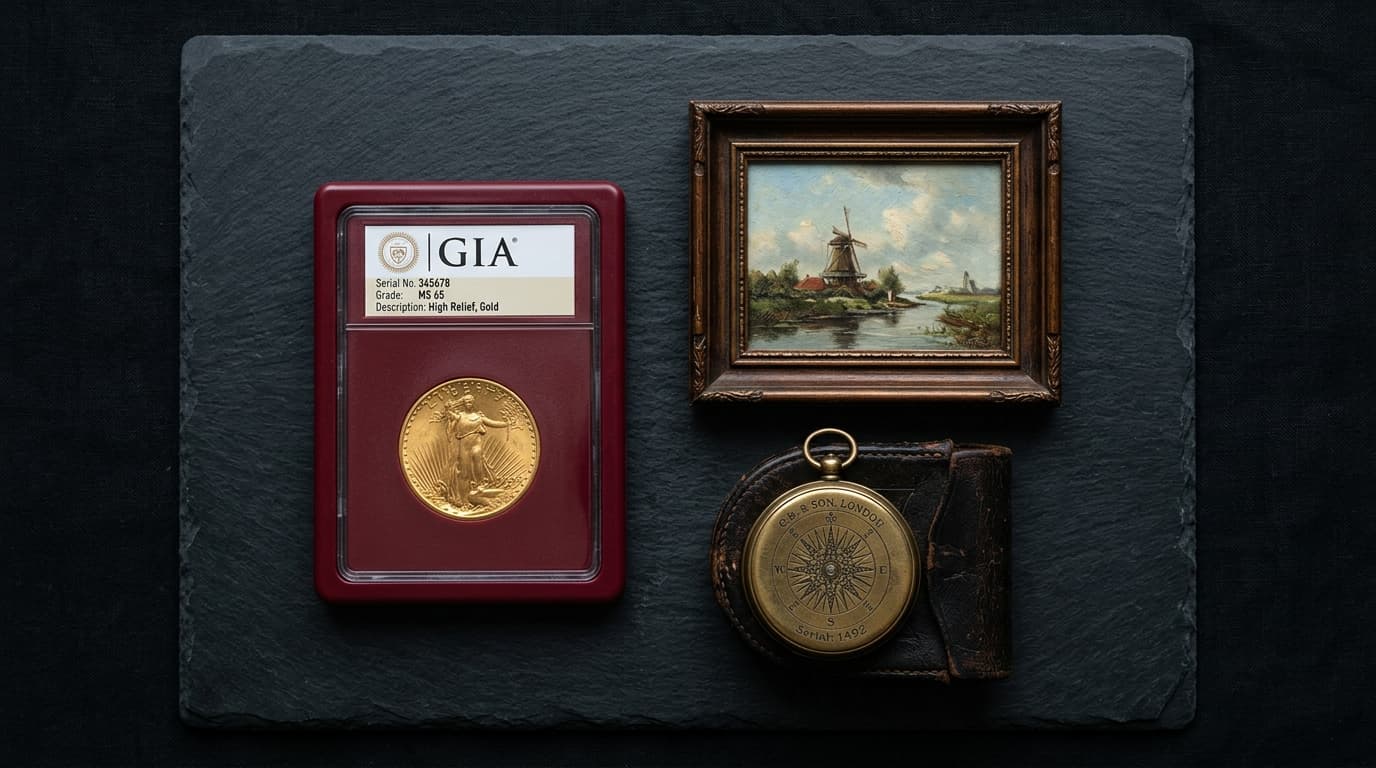
How to Build a Collectibles Portfolio: Coins, Art, and Antiques
Casual collectors lose money. Systematic investors earn 11%+ annually. Here's how to build a collectibles portfolio that actually works as a financial strategy.
The global collectibles market is worth roughly $500 billion — and it is one of the most misunderstood investment categories in existence. Some people earn extraordinary returns from it. Many more quietly lose money without ever realizing why.
The difference comes down to approach. Research from Arthena's 2024 alternative asset report found that casual collectors average -2.3% annual returns after costs, while systematic investors in the same categories achieve 11.7%. Same assets. Completely different outcomes.
This guide is for the second group.
Table of Contents
- Why Add Collectibles to an Investment Portfolio?
- The Three Core Categories: Coins, Art, and Antiques
- How Much of Your Portfolio Should Be in Collectibles?
- Building Your Collection Step by Step
- Authentication and Grading: The Non-Negotiables
- Tracking and Managing Your Portfolio Over Time
- Frequently Asked Questions
Why Add Collectibles to an Investment Portfolio?
The case for collectibles isn't primarily about returns — it's about diversification. According to Citi Private Bank research, collectibles show a -0.12 correlation to equities, meaning they tend to move independently of stock markets. During the 2022 correction, when both stocks and bonds fell simultaneously, portfolios that included a 10% alternative asset allocation saw 18% lower volatility while maintaining returns.
That said, the return data over long horizons is genuinely attractive when you select carefully:
- Fine art: ~8.5% annually from 1950 to 2021
- Rare coins: $1,000 invested in selected rare coins in 1970 was worth over $71,000 by 2022
- Contemporary art (index): ~11.5% annually since 1995
The catch: these are headline numbers, not typical investor outcomes. Transaction costs of 15–30%, storage, insurance, and the knowledge required to select well all eat into returns. Collectibles reward expertise in a way that index funds don't.
Collectibles generate no income — no dividends, no rent. All returns come from price appreciation at the point of sale. This means liquidity is your biggest ongoing risk: you can only realize gains when you find a willing buyer.
Estimated long-term annual returns by collectibles category
The Three Core Categories: Coins, Art, and Antiques
Each category has its own market dynamics, entry points, and risk profile. Understanding these before you allocate capital is essential.
Coins and Numismatics
Rare coins combine the characteristics of a collectible with a tangible asset. Their value comes from three overlapping factors: metal content (gold and silver coins have an inherent melt value), rarity (mintage numbers and surviving population), and condition (grade, as assessed by PCGS or NGC).
Coins are among the most liquid collectibles — there is an active, transparent secondary market through dedicated auction houses like Heritage Auctions and Stack's Bowers, and prices are publicly traceable through PCGS and NGC population reports. A collector who bought a roll of 1950-D Jefferson nickels for $12 in 1950 could sell it today for $2,000+.
Entry point: You can start building a meaningful coin portfolio from $500–$2,000, making it the most accessible category for new investors.
Key risk: Counterfeits and cleaned coins that look uncirculated. Always buy PCGS or NGC certified for anything over $100.
Fine Art and Paintings
Art is the highest-return category over long time horizons — and the hardest to get right. Success depends on identifying artists whose market will appreciate, which requires genuine engagement with galleries, auction records, and the wider art world.
Blue-chip artists (Warhol, Hockney, Banksy, Basquiat) offer relative price stability and global liquidity. Emerging artists offer the potential for outsized returns but most never achieve resale values above original purchase prices.
Entry point: Quality prints by established artists start from $1,000–$5,000. Original paintings with investment potential typically start at $10,000+.
Key risk: Illiquidity and provenance. A painting without documentation of ownership history is difficult to sell through reputable channels.
Antiques and Decorative Arts
Antiques — furniture, ceramics, silver, clocks — have the longest track record of any collectible category, but also the most heterogeneous market. Unlike coins, there are no standardized grading systems. Value depends heavily on maker, period, condition, and current collector fashion.
Antique furniture has seen falling real returns since the 1990s as younger buyers show less interest in large, formal pieces. Smaller decorative items — early ceramics, signed silver, specific pottery marks — have fared better. Market knowledge is absolutely essential here.
Entry point: Variable. Museum-quality pieces start at $5,000–$10,000; category-specific niches (e.g., a specific pottery manufacturer or silversmith) can be entered meaningfully from $500.
Key risk: Market fashion changes. What was collectible in 1985 may have much lower demand in 2026.
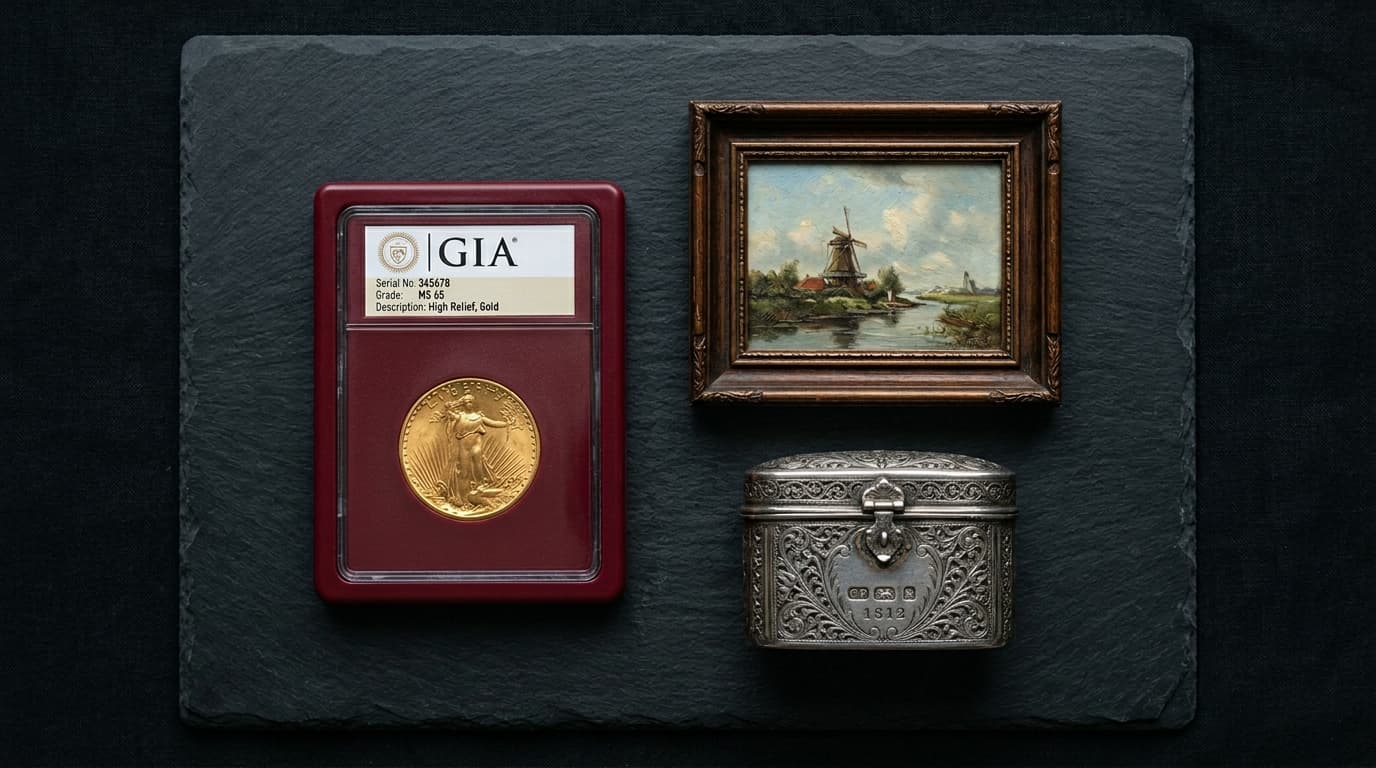
How Much of Your Portfolio Should Be in Collectibles?
Financial advisors broadly agree that collectibles should represent 5–10% of a total investment portfolio for most investors. The reasoning is straightforward: illiquidity and the need for specialist knowledge mean that a larger allocation creates risks that are difficult to manage.
Suggested portfolio allocation including collectibles (moderate investor)
Within that 5–10% collectibles bucket, diversifying across categories reduces exposure to any single market:
- 40–50%: Coins (highest liquidity, most transparent pricing)
- 30–40%: Art (highest return potential, longest hold times)
- 15–25%: Antiques and decorative arts (deepest category knowledge required)
These ratios should shift based on your own knowledge and interests. Expertise is itself a risk management tool — if you deeply understand a category, you can manage it with a higher allocation.
Never allocate money to collectibles that you might need access to within 3–5 years. Forced selling — liquidating at the wrong moment because you need cash — is one of the most common ways investors realize poor returns from otherwise good collections.
Building Your Collection Step by Step
Start With One Category
Spreading across all three categories immediately sounds like diversification but actually increases risk for new investors. Each category has its own terminology, valuation methods, and fraud risks. Learn one deeply before expanding.
Establish Your Research Infrastructure
Before buying anything:
- Coins: Set up accounts on PCGS CoinFacts and NGC Coin Explorer to track populations and price histories. Subscribe to Heritage Auctions archives.
- Art: Use Artprice or Invaluable to research an artist's auction history across all houses over at least 5 years.
- Antiques: Identify 2–3 specialist dealers in your category and attend major fairs (TEFAF, Masterpiece London, Winter Antiques Show) to calibrate your eye.
Buy Condition First, Price Second
In every collectibles category, condition is the most powerful value driver — and the hardest to recover from. A coin graded MS-65 can be worth 10x an MS-63 example of the same date. A painting with even minor restoration sells at a significant discount. An antique with replaced hardware or refinished surfaces loses a substantial portion of its value.
Buying a slightly less desirable piece in exceptional condition almost always outperforms buying a more desirable piece in average condition.
Use Independent Appraisal as a Buying Tool
Before committing to any significant purchase, get an independent valuation that isn't tied to the seller. Tools like WorthLens.ai provide AI-powered market estimates from photos in seconds — useful for a fast sanity check at a fair or auction preview when you don't have time to run a full comparable analysis. For larger purchases, commission a formal written appraisal from an accredited appraiser.
Authentication and Grading: The Non-Negotiables
Counterfeits and misrepresentations are the single biggest risk in collectibles investing. Every category has them.
Coins: PCGS and NGC Certification
For coins with any investment intent, professional grading by PCGS or NGC is non-negotiable above approximately $100 in value. Both services encapsulate the coin in a tamper-evident holder with a standardized grade — removing any ambiguity about condition or authenticity.
PCGS launched in 1986 and NGC in 1987; together they are the dominant grading authorities globally. The grade printed on the label directly determines market value — the same coin in MS-64 vs. MS-65 can differ by 50–200% in price.
Art: Provenance Documentation
For art, authentication flows from paper: certificates of authenticity, gallery invoices, exhibition records, and inclusion in the artist's catalogue raisonné where one exists. Never buy a significant work without a documented ownership history. For works by deceased artists, the relevant foundation or estate is usually the authentication authority.
Antiques: Expert Opinion and Physical Examination
Antiques lack centralized grading systems. Authentication depends on specialist knowledge — construction methods, tool marks, patina, hardware, and period-appropriate materials. For high-value pieces, commission an independent opinion from a specialist curator or accredited appraiser before purchase.
AI-powered appraisal tools like WorthLens.ai can identify stylistic period, likely maker, and comparable market values from photos. This is particularly useful for antiques and decorative arts, where you may encounter pieces at sales or fairs before you have time to consult a specialist.
Tracking and Managing Your Portfolio Over Time
A collectibles portfolio that isn't actively monitored is just a storage problem. Systematic investors treat their collections like any other asset class.
Annual Appraisal Cycle
Set a recurring schedule — at least annually — to reassess the market value of your holdings. For coins, current PCGS and NGC price guides update regularly. For art, track the artist's recent auction results. For antiques, consult current specialist auction realized prices.
Regular appraisals serve multiple purposes: they keep your insurance coverage accurate, they help you identify items that have appreciated significantly and may be worth selling, and they flag categories where market interest is declining.
Know When to Sell
The hardest discipline in collectibles investing is deciding when to exit. Signs that a position may have peaked:
- An artist's auction results start coming in below estimate consistently
- A coin series sees significantly increased population at a given grade (new hoards discovered)
- A decorative arts category begins appearing in clearance-style online auctions rather than specialist sales
Conversely, hold when institutional interest is growing — museum exhibitions, major scholarly publications, and increased auction house attention are all leading indicators of sustained demand.
Insurance and Storage
Every item with material value needs documented insurance coverage. Most homeowner's policies severely limit coverage for collectibles — a dedicated collectibles rider or specialist policy is usually necessary. For coins and small valuables, a bank vault or specialist storage facility reduces both physical and insurance risk.